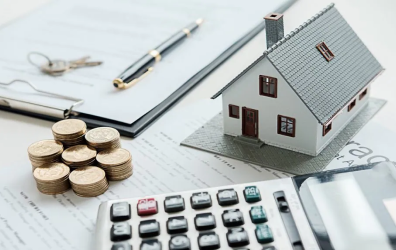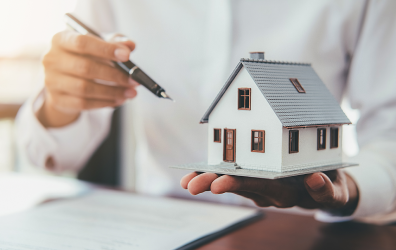


As people get older, many would rather stay in their own homes than go to assisted-living facilities or nursing homes. That concept, known as “aging in place”, allows older residents to stay in their familiar homes and communities. But some home modifications are usually needed, for safety as well as accessibility. The most ideal modifications for aging in place center around reducing fall hazards, increasing mobility, and increasing overall ease of use, all while still maintaining the beauty of the home.
1. Bathroom
One of the major problem spots is the bathroom, which becomes the scene of many a slip or fall. Attaching grab bars close to the toilet and in the shower will give much-needed stability. These bars need to be mounted on wall studs, to insure they can support weight correctly. Another necessary enhancement is a walk-in shower, one with a low or no-threshold entry so that you don't have to step over a high ledge. If you add a built-in shower seat and handheld shower head, the shower becomes even more safe and comfortable. For people with mobility issues, getting rid of the tub may make bathing so much easier. Non-slip floors are also a must because floors will be wet and slippery.
2. Kitchen
The kitchen is another room that may need to be modified for elderly residents. Lowering countertops or building countertops at adjustable heights can assist wheelchair users or people who may not be able to stand for extended periods. Pull-out shelves and drawers can help you access pots, pans and pantry items with less bending and reaching, or the necessity to drag a stepladder in front of your cabinets to reach high shelves. Lever handles provide more convenient control over temperature and flow than knobs do, particularly for people with arthritis. What's more front controls allow you to make simple adjustment, and auto shut off models let you step away with confidence.
3. Stairs
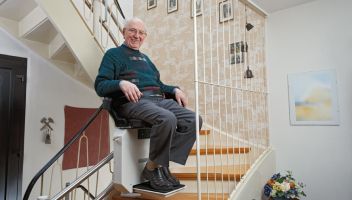
The stairs are a real challenge for many seniors, especially those who have mobility problems. A stairlift is an ideal addition to any multi-level home, carrying people up and down the stairs with ease. Alternatively, strong handrails on both sides of the staircase can give some additional support for those who would rather not rely on mechanical lifts. If space and finances permit, turning one first-floor room into a bedroom eliminates the need to ascend stairs at all. Larger doorways and hallways also mean better access, especially for wheelchair users.
4. Lights
Light is an essential factor in the construction of a safe living environment. Vision deteriorates as we grow older and bright, well-lit rooms make for fewer accidents. Motion-sensor lights that activate in hallways, staircases and bathrooms so you never lose your way in the dark. You can also install a nightlight in bedrooms and along walkways to help seniors navigate to the bathroom at night. By increasing the natural light with larger windows or even skylights the visibility is further enhanced and the space becomes a more enjoyable one to be present in for longer periods.
5. Floor
The flooring is also essential. Thick carpeting or rugs with rough edges can be a tripping hazard and should be substituted for low-pile carpeting or some other smooth, non-slick article covering. Hard surfaces such as vinyl and laminate are easier to clean and maneuver on, particularly for people in walkers or wheelchairs. If rugs are used they should be anchored with non-skid pads.
6. Smart Home Technology
Technology for smart home changes the game in aging in place modifications that now become both easier and safer. Voice-activated assistants can command lights, thermostats and even locks, lessening the requirement for tactile contact with switches and knobs. Medical alert systems with fall detection give you peace of mind that help is a button press away in the event of an emergency.
Ultimately, the best aging-in-place adjustments vary greatly depending on individual needs as well as home structure. An occupational therapist or a certified aging-in-place specialist can help the family build solutions to particular needs. With careful adjustments to their living spaces, seniors can remain in their homes safely and comfortably for many years, and in all likelihood for the rest of their lives, which allows them to maintain their independence and quality of life.